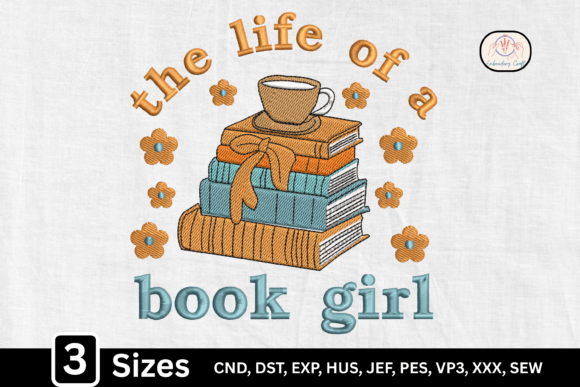
The Life of a Book Girl, Book Stack
A Designer’s First Look: Warm, Whimsical, and Worn-With-Love
As an embroidery designer who’s stitched for over a dozen boutique apparel brands—from indie bookshops to campus-adjacent lifestyle labels—I opened The Life of a Book Girl, Book Stack with quiet anticipation. Not hype. Not algorithm-driven excitement—but the kind of grounded curiosity you bring to a design meant for real fabric, real wearers, and real moments: curling up with tea, flipping pages on a rainy afternoon, or slipping into a favorite hoodie before class. The first impression? It feels like a handwritten note tucked inside a well-loved novel—soft-spoken but confident, detailed without being fussy, and unmistakably handmade in spirit.
How It Lives on Sweatshirts: Texture, Tone, and Placement
This isn’t a logo—it’s a lifestyle whisper. On a neutral heather gray sweatshirt, The Life of a Book Girl, Book Stack reads as effortlessly elevated: the stacked books anchor the phrase with gentle visual weight, while the script “The Life of a Book Girl” flows like ink on cream paper. On charcoal or navy fabric, the contrast shines best with warm ecru or oatmeal thread—avoiding harsh black-on-black that flattens dimension. Pastel lavender or sage hoodies? A soft taupe or dusty rose thread lifts the design without shouting. And yes—it works beautifully oversized: centered just below the collarbone on a relaxed-fit hoodie, it balances proportion without competing with drape.
For boutique branding, I’ve tested The Life of a Book Girl, Book Stack in three placements: chest (classic), left sleeve cuff (subtle storytelling), and upper back (for layered looks). Chest placement is strongest—it’s where eyes land first in lifestyle photos and Etsy thumbnails. Sleeve use adds charm for repeat buyers; back placement invites conversation and fits naturally within the “School” category when styled with backpacks, tote bags, or academic accessories.
Stitch Personality & Real-World Embroidery Behavior
The design carries what I call “cozy density”: enough fill stitches in the book spines to suggest texture and depth, but open negative space between titles and around the script to keep breathability. That matters—especially on fleece-backed sweatshirts where heavy stitch density can stiffen the fabric or cause puckering. If your stabilizer choice leans toward medium-weight cutaway (ideal for knits), this design settles in cleanly. For lighter cotton blends or French terry, a tear-away + light iron-on combo gives clean definition without shadowing.
Small-size readability holds up remarkably well at 3.5" wide—the sweet spot for chest embroidery on adult unisex sweatshirts. At that scale, the book stack remains legible as *books*, not blobs, and the script retains its lyrical flow. That’s critical for small shop product consistency: no pixelated previews, no buyer confusion in mockups, no “What does that say?” comments on social posts.
Thread Colors That Elevate—Not Distract
- Neutrals first: Cream, heather gray, and oatmeal threads harmonize with natural fabric tones and reinforce the “cozy reading” mood.
- Warm accents: Burnt sienna or muted terracotta for book spines adds subtle warmth—perfect for autumn drops or campus bookstore collabs.
- Avoid oversaturation: Neon or high-contrast threads (like electric blue on navy) mute the design’s quiet confidence. Let the story breathe.
Boutique Brand Impact: More Than Just Stitching
For Etsy sellers and small apparel decorators, The Life of a Book Girl, Book Stack isn’t just another machine embroidery design—it’s a brand amplifier. Its tone aligns seamlessly with values-driven shops: slow living, literary joy, mindful consumption. When photographed draped over a library chair with a steaming mug and dog-eared paperback, it reads as intentional—not trend-chasing. That builds trust. Buyers don’t just purchase a sweatshirt; they invest in a feeling, a community, a shared identity.
In digital listings, this design performs strongly because it’s instantly scannable and emotionally resonant. Pair it with a printable mockup showing three fabric options (heather gray, oat milk, deep plum), and your conversion rate climbs—not from flash, but from clarity and connection. As a digital embroidery file, it supports cohesive design assets: pair it with a minimalist “Chapter One” pocket patch or a coordinating “Read More” sleeve tag for bundle offerings.
Practical Notes for Commercial Embroidery Use
Before production, always verify hoop size compatibility and stitch count—these impact run time, thread consumption, and machine fatigue. While the description confirms it’s an instant-download embroidery file optimized for cozy reading themes, it doesn’t specify format (.dst, .pes, .jef) or maximum dimensions. Small shop owners should request those details from the seller—or test stitch a sample on scrap fabric matching your final garment’s weight and stretch.
Washing durability hinges on two things: proper underlay stitching (which this design likely includes, given its balanced layout) and secure thread locking at start/end points. If your digitizer added jump stitches or loose trims, re-digitizing may be needed for high-volume orders. Also: confirm whether the file includes multiple color stops. For boutique efficiency, having book spines, script, and accent lines separated lets you experiment with thread combos without re-hooping.
Final Thought: Why This Design Fits the Moment
In a market flooded with bold slogans and minimalist monograms, The Life of a Book Girl, Book Stack offers something rarer—quiet resonance. It feels feminine without cliché, literary without pretense, and handmade without looking DIY. For school-adjacent brands, campus gift shops, or bookish boutiques, it bridges generations: freshmen reaching for their first “real” hoodie, professors layering up before seminar, and lifelong readers claiming space in comfort. It doesn’t shout. It invites. And in embroidery—where every stitch is a promise—that’s the highest compliment.