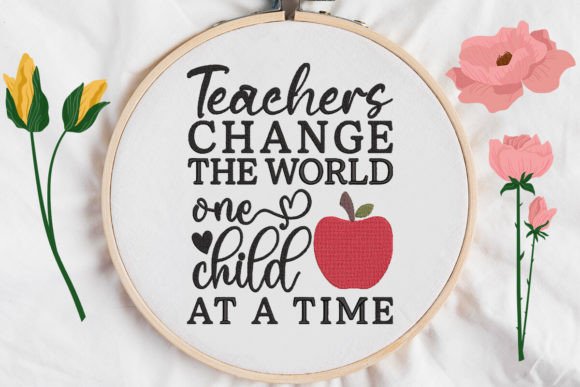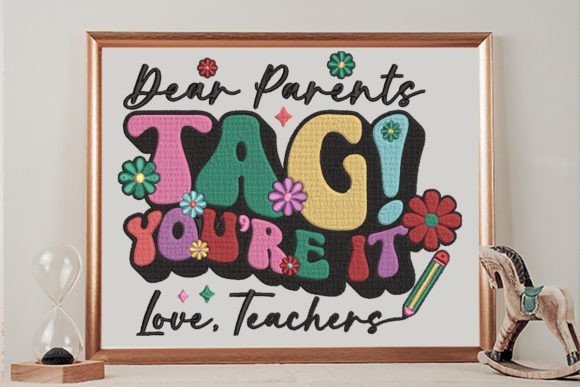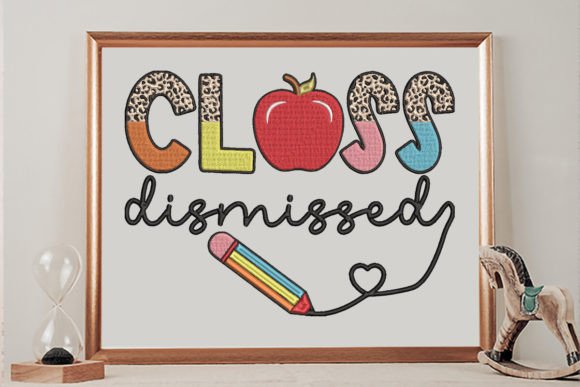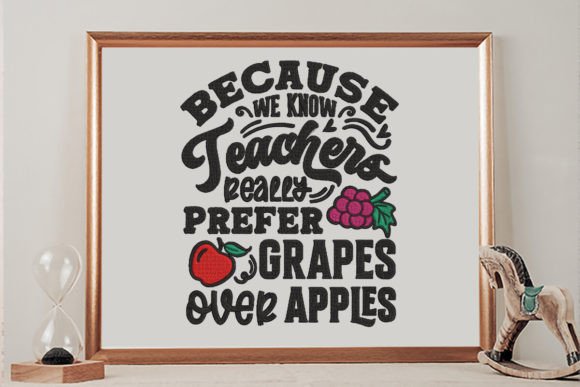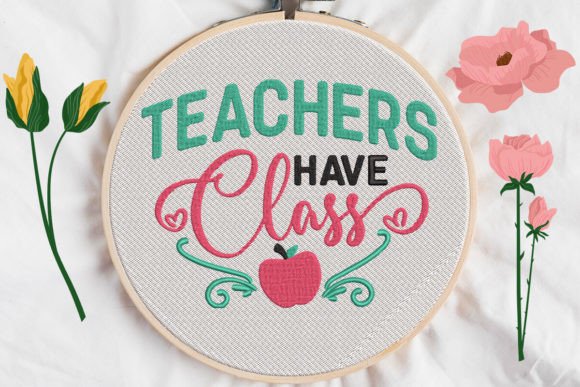
Teachers Have Class
A Practical Embroidery Designer’s Review for Small Business Merchandise
As an embroidery designer who’s developed hundreds of commercial designs for small businesses—from indie bakeries and florists to creative studios and boutique schools—I approached Teachers Have Class with a very specific question: *Does this machine embroidery design translate into trustworthy, scalable brand assets—not just cute decoration?*
At first glance, the title alone sets a confident, warm tone. “Teachers Have Class” reads as clever, respectful, and subtly witty—never cutesy or condescending. It avoids overused tropes (no apples, no chalkboards, no cartoon owls), which makes it feel refreshingly modern within the School category. Visually, based on its description as a “lovely embroidery design” suitable for apparel, home decor, and wall art, I interpret it as clean-lined, well-spaced, and balanced—not overly ornate or fussy. That’s critical when you’re scaling it across multiple product types.
Where Teachers Have Class Shines in Real Business Use
This design excels where clarity, consistency, and character matter most:
- Embroidered patches: Its phrasing works beautifully at 2.5"–3.5" sizes—ideal for sew-on or iron-on patches on tote bags, denim jackets, or staff aprons. The rhythm of the words allows natural breathing room between letters, reducing thread crowding.
- Staff uniforms & aprons: As a chest logo or sleeve accent, Teachers Have Class communicates professionalism without stiffness. A local Montessori studio or after-school tutoring hub could use it on cotton twill aprons—reinforcing expertise while keeping warmth front and center.
- Cap embroidery: On structured caps (especially low-profile twill or cotton blends), it holds up well as a front-arch or side-panel motif—provided letter height stays above 0.75". Its confident cadence reads clearly even in motion.
- Tote bag design & boutique merchandise: Paired with neutral canvas or linen, it adds instant handmade credibility. Think: a floral shop offering “Teacher Appreciation Week” gift bundles—the embroidered tote becomes both functional and emotionally resonant.
- Product packaging accents: Stitched onto fabric tags, reusable produce bags, or gift wrap ribbons, it elevates perceived value. Customers associate clean, intentional embroidery with care—and that builds trust faster than any printed label.
Where to Use Teachers Have Class Thoughtfully
Even strong designs have boundaries—and knowing them prevents costly re-runs or disappointed clients. Here’s where caution is warranted:
- Small patch sizes under 2": Tight letter spacing or fine serifs (if present) may blur. Always test stitch-out at intended size—especially if using it for keychain patches or mini lapel accents.
- Curved surfaces like cap fronts or curved tote handles: Letter distortion can occur if the design wasn’t digitized with gentle curve compensation. Request a vector preview or ask your digitizer about contour-following capability.
- Dark uniforms or textured fabric: High stitch density or thin outlines may recede on heavy twill or fleece. Boost contrast with brighter thread colors (e.g., ivory on navy, kelly green on charcoal) and confirm stabilizer choice matches fabric weight.
- Frequent-wash items (e.g., staff work shirts): Review whether the design includes dense fill areas that could stiffen over time. A lighter stitch count often wears better—and looks more refined on daily-use apparel.
How Teachers Have Class Strengthens Brand Identity
For small business owners building recognition through custom apparel and branded goods, Teachers Have Class does more than decorate—it signals alignment. When a children’s bookstore embroiders it onto staff tees, it quietly tells customers: *We value education, creativity, and thoughtful mentorship.* That kind of resonance builds loyalty.
It also supports visual consistency across touchpoints: same phrase on an embroidered apron, a printable mockup for social media, and a stitched tag on handmade greeting cards. That repetition reinforces memory—and makes your small business merch feel intentional, not incidental.
Crucially, it bridges “handmade product” charm with professional polish. Unlike clip-art-style school motifs, Teachers Have Class feels curated—not generic. That distinction matters on Etsy listings, local market booths, or boutique shelf displays where buyers scan for authenticity in seconds.
Essential Embroidery Designer Notes Before Production
If you’re sourcing the Teachers Have Class digital embroidery file for commercial embroidery, here’s what I always verify—before cutting thread or sending to a client:
- Test stitch it in black and white first—this reveals spacing issues, overlapping letters, or unintended gaps invisible on screen.
- Check how it performs at your smallest intended patch size (e.g., 2" wide). Resize digitally *before* stitching—don’t rely on machine scaling.
- Review thread color recommendations—if none are given, prioritize high-contrast combos for legibility on varied fabrics.
- Inspect letter spacing and kerning—tight tracking between “s” and “H” or “C” and “l” can cause thread nests.
- Confirm hoop size compatibility with your production setup—some versions may require larger hoops for optimal tension control.
- Always test on real fabric with your intended stabilizer. Cotton poplin behaves differently than canvas or performance knit.
- Create a printable mockup for client approval—showing scale, placement, and thread color on their exact garment helps avoid revisions.
- Compare Teachers Have Class beside your other design assets (logos, icons, fonts). Does it harmonize—or clash—in weight, style, or tone?
- Verify commercial licensing terms. Since it’s marketed for apparel, gift items, and wall art, confirm whether resale rights extend to physical products you’re producing for others.
Remember: the strongest embroidered patch isn’t the flashiest—it’s the one that serves your brand’s voice, survives daily wear, and earns a second look from someone passing your café counter or browsing your Etsy shop. Teachers Have Class delivers that balance—when used with intention, tested with rigor, and stitched with care.