Teacher Owl Embroidery Design Review
First Impression: Playful, Professional, and Perfectly On-Brand
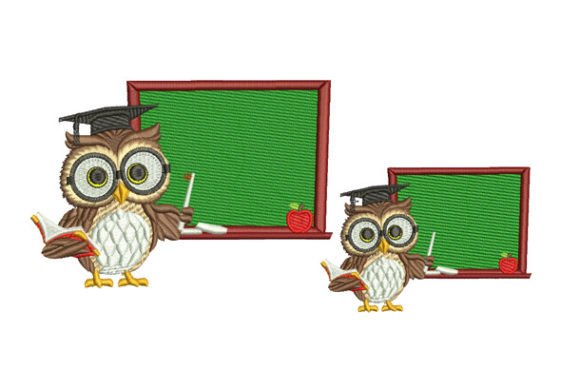
As an embroidery designer who’s developed hundreds of commercial designs for small businesses—from indie bakeries to boutique florists—I immediately recognized Teacher Owl’s quiet strength. The name alone evokes warmth, intelligence, and approachability—ideal for schools, creative studios, childcare centers, and even whimsical local brands like a “Storybook Café” or “Owl & Thyme Apothecary.” It’s not overly cutesy, nor is it stiff or academic. Instead, Teacher Owl strikes a rare balance: friendly enough for handmade product labels, refined enough for staff aprons or embroidered patches on premium tote bags.
Real-World Business Use: Where Teacher Owl Shines
Teacher Owl works exceptionally well as a small embroidered patch—think 2.5"–3.5" diameter—sewn onto the chest of staff uniforms, the front brim of structured caps, or the corner of linen aprons. Its clean silhouette and moderate detail translate beautifully to cap embroidery, especially when digitized with smooth satin-stitch wings and subtle fill gradients. On tote bag design applications, it holds attention without overwhelming—ideal for boutique merchandise where visual consistency matters across product lines.
For custom apparel, Teacher Owl excels as a sleeve accent on lightweight tees or a back-neck detail on woven work shirts. It also elevates apron embroidery: imagine it stitched in navy thread on ivory cotton canvas—professional yet personable. As a machine embroidery design for school-branded items, it supports both traditional institutions and progressive learning spaces alike. And because it reads clearly at medium scale, it’s highly effective in printable mockups used for client presentations or Etsy listing visuals.
Where to Use Teacher Owl With Intention
Like any thoughtful digital embroidery file, Teacher Owl isn’t one-size-fits-all. Avoid shrinking it below 1.75" for embroidered patch use—fine beak details or feather texture may collapse or stitch poorly on dense fabrics. On curved surfaces (like cap fronts), confirm that the design’s outer elements don’t distort during hooping; some versions may need minor re-digitizing for optimal stretch recovery.
Be mindful of stitch density. If the original file includes tightly packed fills or intricate outlines, test it first on dark uniforms or textured fabric—high density can cause puckering or thread breakage. Also, verify that any implied text (e.g., “Miss Owl” or “Teach with Heart”) isn’t part of the core embroidery file; if present, assess legibility at common sizes before committing to production.
How Teacher Owl Strengthens Brand Identity
Small business owners often underestimate how much a single, well-executed machine embroidery design influences customer trust and recognition. Teacher Owl builds instant familiarity—it’s memorable without being loud, distinctive without sacrificing versatility. When repeated across staff aprons, branded tote bags, and product packaging accents, it creates cohesive design assets that signal care, consistency, and craft.
For handmade brands selling on Etsy or at local markets, Teacher Owl adds perceived value: customers associate clean, intentional embroidery with quality and authenticity. It subtly reinforces brand identity as nurturing, knowledgeable, and grounded—not corporate, but confidently professional. That emotional resonance boosts buyer engagement far more than generic clipart ever could.
Practical Embroidery Designer Notes for Small Business Use
Before launching Teacher Owl into production, follow these field-tested steps:
- Test in black and white first—this reveals contrast issues, spacing inconsistencies, and potential thread nesting before color selection.
- Check small-patch viability by scaling down to your target size (e.g., 2") and reviewing stitch paths in your embroidery software.
- Evaluate thread color contrast carefully—especially for dark uniforms or textured fabric. A soft sage green or warm terracotta often reads better than stark black on heather gray.
- Inspect spacing between elements (e.g., between eyes and beak) to ensure clarity after stitching—tight gaps may merge on low-thread-count cotton.
- Confirm hoop size compatibility with your primary machines. If it requires a large hoop, plan for re-hooping on curved items like caps.
- Test on real fabric—not just stabilizer swatches—with your intended garment type and wash cycle. A successful finished product survives laundering without fraying or distortion.
- Use proper stabilizer: cutaway for knits, tear-away for stable wovens, and fusible for lightweight linens used in aprons or boutique merch.
- Create a physical mockup for client approval—nothing replaces seeing how Teacher Owl looks stitched on actual fabric.
- Compare it beside other design assets—does it harmonize with your logo, typography, and overall visual language?
- Confirm commercial licensing before using Teacher Owl for resale items, staff uniforms, or branded merchandise. Not all embroidery files include blanket commercial rights.
Final Thoughts for Merch Creators and Craft Businesses
Teacher Owl isn’t just another school-themed graphic—it’s a flexible, scalable embroidery asset built for real business needs. Whether you’re outfitting a team of educators, branding artisanal goods, or designing limited-run event merch, this machine embroidery design delivers personality with polish. It respects the craft of embroidery while serving the practical demands of small business merch: durability, reproducibility, and brand alignment. For apparel decorators, Etsy sellers, and handmade brands alike, Teacher Owl earns its place in the working library—not as decoration, but as a strategic, stitch-perfect tool.