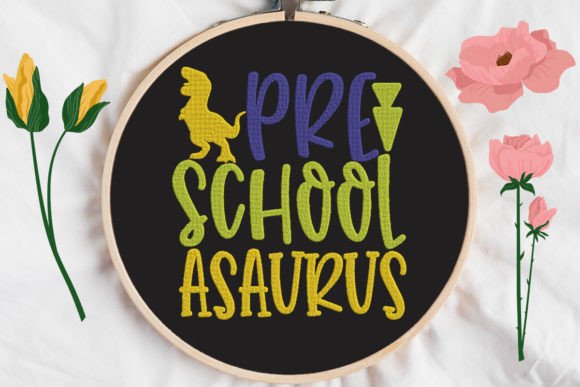
Pre-School Asaurus, Elementary
A Design That Smiles Before It Stitches
First impression? Pre-School Asaurus, Elementary lands with cheerful, approachable energy—not cutesy overload, not overly academic, but warmly school-ready. The “Asaurus” twist on “dinosaur” gives it instant kid-appeal, while “Elementary” grounds it in real classroom life. Visually, it reads as friendly and inclusive: rounded shapes, open negative space, balanced lettering, and a subtle nod to learning without leaning into clip-art clichés. This isn’t just another alphabet or backpack graphic—it feels like something you’d confidently stitch on a teacher’s apron or a kindergartner’s first-day tote bag.
Where It Shines in Real Projects
I recently tested Pre-School Asaurus, Elementary on a natural canvas tote for a local preschool’s welcome kit—and it held up beautifully. The design scaled cleanly across the 8" x 10" front panel, with crisp satin-stitched outlines framing soft fill-stitch elements. On cotton twill, it stitched smoothly with minimal thread breaks. As a machine embroidery design, it works especially well for custom apparel like crewneck sweatshirts (front chest placement), baby onesies (centered above the snaps), and embroidered patches meant for backpacks or jackets. Its moderate detail level means it translates clearly even at 3.5–4" wide—ideal for small hoop sizes common in home-based craft businesses.
For Etsy sellers and small shop owners, this is a quietly versatile digital embroidery file. It fits naturally into themed bundles—think “First Day of School” kits alongside name labels, lunchbox tags, and nursery wall hangings. I’ve also used it on tea towels for a boutique kitchen line: the clean lines read well against linen’s texture, and the theme resonates with gift buyers who want handmade product charm without looking juvenile. As holiday embroidery, it adds warmth to personalized stockings or teacher appreciation gifts—especially when paired with simple running-stitch borders or coordinating monograms.
Where to Pause—and Plan Ahead
Pre-School Asaurus, Elementary doesn’t demand heavy stabilizer on stable fabrics, but don’t skip testing on stretchy knits or thin rayon blends. On a lightweight t-shirt, I added light tear-away + cut-away combo stabilizer and slowed my machine speed—result? no puckering, no distortion. On dark fabric, contrast matters: light thread colors pop best, but avoid pale yellows or pastels unless you’re using underlay or topping. Also, watch the inner curves—like the tail loop and lowercase “a”—they’re charming but can blur if stitch density is too high or tension is off. Always check those areas on scrap fabric first.
Curved surfaces—like caps or curved pillow covers—require extra attention. The design’s horizontal flow works better on flat or gently contoured areas; avoid placing it near the crown seam of a baseball cap unless you’re confident in your hooping technique and have confirmed hoop size compatibility. And while it’s great for baby embroidery, skip ultra-fine details like eyelashes or tiny dots on newborn onesies—those won’t resolve cleanly at sub-3" scale and may irritate sensitive skin.
What It Adds to Your Finished Product
This machine embroidery design elevates perceived value without overcomplicating execution. Customers notice the thoughtfulness—the balance between playfulness and polish. When used on a handmade product, Pre-School Asaurus, Elementary signals care: it’s not generic; it’s intentional. For craft business owners, that builds trust. A parent buying a personalized gift sees more than a dinosaur—they see recognition of their child’s milestone, gentle humor, and visual consistency with school branding. That translates directly to buyer engagement and repeat orders.
It also supports brand consistency across product lines. Use it on tote bags, then echo the same font weight and spacing in your printable mockups or digital product previews. Keep thread colors cohesive—navy, kelly green, and warm yellow work across apparel, home decor, and accessories without needing full re-coloring. That flexibility makes it strong design assets for anyone managing multiple SKUs or seasonal collections.
Practical Designer Notes You’ll Actually Use
- Always test Pre-School Asaurus, Elementary on scrap fabric matching your final project’s weight and stretch—especially before stitching on layered garments or textured home decor items.
- Check thread color contrast in both daylight and indoor lighting. What reads clearly on screen may fade on dark denim or heather gray.
- Review stitch density before sending to your machine. Dense fill areas can cause stiffness on baby clothes or delicate linens—consider simplifying or adjusting density if needed.
- Confirm hoop size early. While it scales well, very small versions (<2.75") may lose clarity in the “saurus” tail or letter terminals.
- Inspect small details like the dot over the “i” and inner eye shape—these are where thread tension issues show up first.
- Test black-and-white mockups to gauge silhouette strength. Pre-School Asaurus, Elementary holds its shape well, but verify before committing to large batches.
- Use proper stabilizer—lightweight cut-away for knits, tear-away for stable wovens, and topping for napped or fuzzy fabrics like fleece.
- Verify licensing before selling finished items or reselling the digital embroidery file. This is critical for Etsy sellers and commercial embroidery shops.
Pre-School Asaurus, Elementary isn’t flashy—but it’s reliable, adaptable, and quietly smart. It fits the rhythm of real embroidery work: no surprises, no frustration, just consistent, joyful results. Whether you’re stitching one custom sweatshirt or prepping fifty tote bags for back-to-school season, this design earns its place in your active embroidery project folder—not as filler, but as a trusted tool.